amazing grace lyrics original pdf hymnal
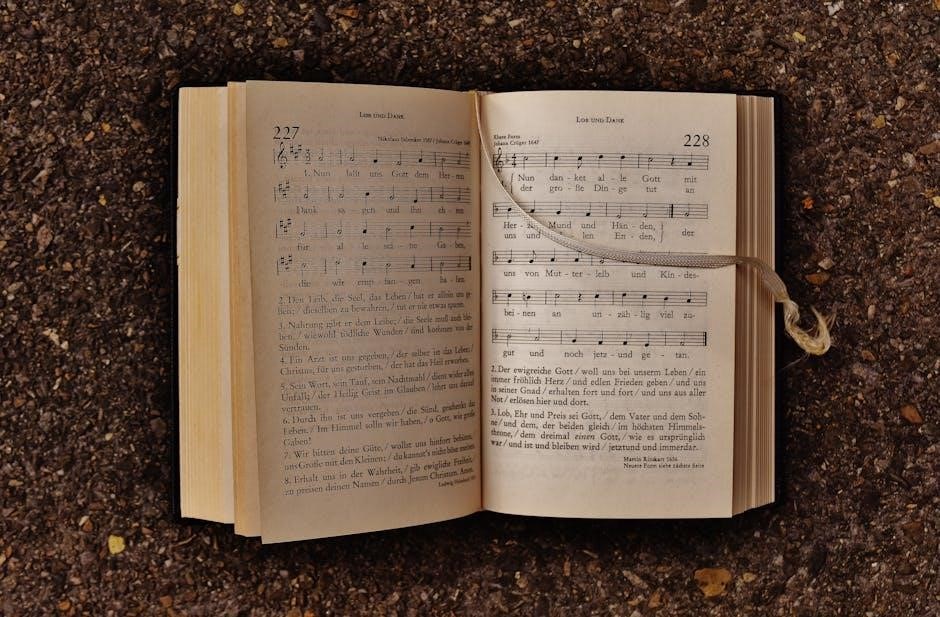
Amazing Grace Lyrics, Original PDF Hymnal: A Comprehensive Plan
This plan details a deep dive into the history and accessibility of “Amazing Grace,” focusing on its lyrical origins, 1779 publication, and locating original hymnal PDFs.
It explores the hymn’s journey, from Newton’s personal transformation to its cultural impact and enduring theological significance, alongside musical adaptations.
Historical Context of John Newton
John Newton’s life unfolded during a period of significant societal shifts, deeply influencing his spiritual journey and, ultimately, the creation of “Amazing Grace.” Born in 1725, Newton initially pursued a career at sea, becoming involved in the transatlantic slave trade – a practice prevalent and legally sanctioned in 18th-century England.
This early involvement profoundly troubled him, leading to a dramatic spiritual conversion following a near-death experience during a violent storm. He subsequently became an Anglican clergyman and a fervent abolitionist, dedicating his life to opposing the slave trade. Newton’s experiences shaped his understanding of grace, redemption, and the transformative power of faith, themes central to his most famous hymn. His background provides crucial context for interpreting the lyrics and appreciating the depth of his personal testimony embedded within “Amazing Grace.”
Newton’s Early Life and Transformation
Newton’s early life was marked by instability and a lack of religious upbringing, contributing to a rebellious and wayward youth. He initially resisted his mother’s attempts at religious instruction and eventually joined the British Navy, embarking on a career that led him directly into the slave trade. This period exposed him to immense brutality and moral conflict, sowing seeds of discontent within his soul.
A pivotal moment arrived during a violent storm off the coast of Africa in 1748, when Newton faced imminent death. This near-death experience triggered a profound spiritual awakening, leading him to seek God’s mercy. He eventually left the slave trade, embraced Christianity, and dedicated his life to ministry, a transformation vividly reflected in the heartfelt lyrics of “Amazing Grace.”
Newton’s Career as an Anglican Clergyman
Following his dramatic conversion, John Newton pursued ordination within the Church of England, though facing initial hurdles due to his unconventional background. He served as a curate and eventually became Rector of St. Mary Woolnoth in London, a position he held for sixteen years. His sermons were renowned for their honesty, humility, and relatable accounts of his past struggles.
Newton’s pastoral work focused on providing spiritual guidance and support, particularly to those marginalized by society. He became a respected figure, known for his compassionate approach and unwavering faith. This period of dedicated ministry profoundly shaped his theological understanding and fueled his prolific hymn writing, including the creation of “Amazing Grace.”
The Abolitionist Movement and Newton’s Involvement

Though not a radical activist, John Newton became a significant, albeit cautious, voice within the burgeoning abolitionist movement. His personal experience with the horrors of the slave trade – having been a former slave ship captain – deeply impacted his convictions. He penned “Thoughts Upon the African Slave Trade” in 1788, a powerful and influential pamphlet detailing his remorse and advocating for its end.
Newton’s testimony carried considerable weight, lending moral authority to the cause. He corresponded with key figures like William Wilberforce, offering support and encouragement in their parliamentary efforts. His evolving stance, rooted in his faith and repentance, demonstrated a commitment to social justice and human dignity.
The Composition of “Amazing Grace”
“Amazing Grace” wasn’t conceived as a standalone hymn, but rather as a poem penned by John Newton in 1772, initially titled “Faith’s Review and Expectation.” It was written as part of a collection intended for his own congregation, reflecting on his personal journey from despair to faith. The poem’s power lay in its raw honesty and relatable themes of redemption and forgiveness.
Newton initially hesitated to share it widely, considering it too personal. However, it circulated amongst his peers and was eventually set to the tune of “New Britain” in 1779, becoming the hymn we know today. This pairing proved pivotal, solidifying its place in Christian worship and beyond.
The Original 1779 Publication
“Amazing Grace” first appeared in print in 1779 within Newton’s collection, Olney Hymns, co-authored with William Cowper; This collection was a significant work, showcasing hymns designed for private devotion and congregational singing. The hymn was simply listed as one among many, not initially highlighted as a standout piece.
Early copies of Olney Hymns are rare and valuable today, serving as primary sources for understanding the hymn’s original context. Locating authentic 1779 PDFs requires careful scrutiny, as numerous reproductions and variations exist. The typography and layout of these original hymnals offer insights into 18th-century printing practices.
Early Reception and Evolution of the Hymn
Initially, “Amazing Grace” wasn’t considered one of Newton’s finest hymns in England, gaining prominence later. Its journey to widespread recognition was gradual, accelerating with its arrival in North America. The hymn quickly found a place within American hymnals, becoming integrated into church music during the Second Great Awakening.
This period saw the hymn’s emotional resonance amplified, particularly within the African American spiritual tradition. Over time, variations in lyrics and musical arrangements emerged, reflecting diverse cultural interpretations. The hymn evolved from a personal reflection to a universally embraced anthem of faith and redemption.

Newton’s Other Hymns and Literary Works
Beyond “Amazing Grace,” John Newton was a prolific hymn writer, contributing significantly to the Anglican hymnody of his time. His extensive catalog includes numerous hymns exploring themes of faith, repentance, and divine grace, often reflecting his personal spiritual journey. He penned verses that resonated deeply with his congregations, offering solace and encouragement.
Newton’s literary output extended beyond hymns, encompassing letters, theological treatises, and his influential autobiography, An Authentic Narrative. These works provide valuable insight into his evolving beliefs and his commitment to the abolitionist cause, enriching our understanding of the man behind the beloved hymn.
The Lyrics: A Detailed Analysis
“Amazing Grace” comprises four stanzas, each building upon the central theme of redemption. The lyrics, deceptively simple, possess profound theological depth, tracing a journey from despair to hope. Newton’s masterful use of language conveys a powerful message of unmerited favor and transformative grace. Each line resonates with personal testimony, reflecting his own experience of salvation.
A close examination reveals a carefully constructed narrative, moving from acknowledging past sinfulness to celebrating present forgiveness and anticipating future glory. The hymn’s enduring appeal lies in its universal relatability and its ability to articulate the core tenets of Christian faith in a concise and moving manner.
“Amazing Grace, how sweet the sound” ─ Meaning and Significance
The opening line, “Amazing Grace, how sweet the sound,” immediately establishes a tone of awe and gratitude. This phrase encapsulates the overwhelming joy and relief experienced upon realizing God’s unearned forgiveness. The “sweetness” isn’t merely emotional; it represents the profound peace and liberation found in redemption. It’s a recognition of divine intervention in a life previously marked by sin and suffering.
This initial statement sets the stage for the entire hymn, highlighting the transformative power of grace. The simplicity of the wording amplifies its impact, making it accessible and deeply resonant with individuals from all walks of life. It’s a declaration of hope and a testament to God’s boundless love.
“That saved a wretch like me” ⎼ Exploring the Theme of Redemption
The line “That saved a wretch like me” is arguably the most powerful and humbling in the hymn. Newton deliberately uses the term “wretch” to emphasize his own perceived unworthiness and the magnitude of God’s grace. This isn’t false modesty; it reflects a genuine acknowledgement of his past life and failings.
The phrase underscores the core theme of redemption – the act of being rescued from sin and restored to a right relationship with God. It highlights that salvation isn’t earned through merit, but freely offered to even the most flawed individuals. This resonates deeply, offering hope to those burdened by guilt and shame.
“I once was lost, but now am found” ─ The Journey of Faith
This iconic line encapsulates the transformative power of faith and the journey from spiritual alienation to divine connection. “Lost” represents a state of separation from God, characterized by sin, despair, and a lack of purpose. Newton’s personal experience with this feeling is palpable.
The contrasting “now am found” signifies the moment of conversion and the joy of rediscovering one’s identity in Christ. It’s not merely a physical finding, but a spiritual awakening – a realization of God’s unconditional love and acceptance. This journey, from lost to found, is central to the Christian narrative.
“Was blind, but now I see” ⎼ Spiritual Enlightenment
This powerful metaphor illustrates the transition from spiritual ignorance to understanding, representing a profound shift in perception. “Blindness” symbolizes a lack of spiritual insight, an inability to recognize truth, and a life lived in darkness. Newton’s own transformation from a slave trader to an abolitionist embodies this awakening.
“Now I see” signifies the moment of enlightenment, when divine grace illuminates the heart and mind, revealing God’s love and purpose. This isn’t simply intellectual understanding, but a deeply felt, experiential knowledge. It’s a recognition of one’s own sinfulness and the need for redemption, leading to a new way of life.
The Hymn’s Journey to America
“Amazing Grace” arrived in North America at a pivotal moment for church music, quickly gaining traction and being incorporated into American hymnals. Its message resonated deeply with the burgeoning religious landscape, particularly during the Second Great Awakening. Early American hymnals readily adopted the hymn, spreading its message of hope and redemption across the colonies.
The hymn’s simple yet profound lyrics proved universally appealing, transcending denominational boundaries. It became a staple in both Protestant and evangelical churches, fostering a sense of shared faith. This rapid adoption cemented “Amazing Grace” as a cornerstone of American religious culture, setting the stage for its enduring legacy.
Early American Hymnals Featuring “Amazing Grace”

Identifying the earliest American hymnals to include “Amazing Grace” is crucial for tracing its initial reception. Researchers have found the hymn appearing in collections circulated throughout the late 18th and early 19th centuries. These hymnals often featured variations in typesetting and arrangement, reflecting regional printing practices and musical preferences.
Locating digitized versions of these early hymnals provides invaluable access to the hymn’s original presentation. Examining these sources reveals how “Amazing Grace” was contextualized within broader collections of sacred songs, offering insights into its evolving significance within American religious life.
The Role of the Second Great Awakening
The Second Great Awakening, a Protestant revival movement in the early 19th century, profoundly impacted the spread of “Amazing Grace” across America. This period fostered a heightened emphasis on personal religious experience and emotional worship, creating fertile ground for the hymn’s message of redemption to resonate deeply with believers.
The hymn’s accessibility and relatable lyrics made it a staple in revival meetings and camp meetings, contributing to its widespread popularity. It wasn’t until the nineteenth-century Second Great Awakening that Newton’s hymn was considered one of his finest, solidifying its place in American hymnody.
“Amazing Grace” and the African American Spiritual Tradition

“Amazing Grace” holds a particularly poignant significance within the African American spiritual tradition, becoming deeply interwoven with the history of slavery and the yearning for freedom. Enslaved African Americans identified with the hymn’s message of finding grace and redemption amidst suffering, transforming it into a powerful expression of hope and resilience.
The hymn’s simple melody and heartfelt lyrics lent themselves beautifully to the call-and-response style characteristic of spirituals, fostering a sense of communal worship and shared experience. Amazing Grace arrived in North America at an opportune moment, quickly becoming incorporated into church hymnals and the hearts of many.
PDF Availability and Original Hymnal Scans
Locating authentic PDF scans of original 1779 hymnals containing “Amazing Grace” presents a challenge, but several online repositories offer digitized versions of 19th-century hymnals where the hymn gained prominence. These resources provide valuable insights into the hymn’s early reception and textual variations.
Researchers and enthusiasts can explore digital libraries and archival collections for scans, noting differences in typography and layout across various editions. PDFs offer accessibility, allowing detailed analysis of the hymn’s presentation within its historical context. Variations in early printed versions reveal the hymn’s evolving form.
Locating Authentic 1779 Hymnal PDFs
Finding a direct PDF scan of the exact 1779 hymnal featuring John Newton’s “Amazing Grace” is remarkably difficult. The original publication wasn’t widely circulated, and surviving copies are rare. However, digitized versions of hymnals from the late 18th and early 19th centuries, which include “Amazing Grace” shortly after its initial publication, are more accessible.
Online archives, such as those maintained by universities and libraries, are key resources. Searching for “Newton hymnals” or “18th-century Anglican hymnals” can yield results. Be prepared to examine multiple sources and verify the edition’s date and provenance.
Variations in Early Printed Versions
Early printings of “Amazing Grace” weren’t standardized; variations existed in typesetting, hymn numbering, and even slight lyrical differences. Examining these early hymnals reveals inconsistencies in the hymn’s presentation. Typography differed significantly – font styles, spacing, and ornamentation varied between publishers and print runs.
Researchers note that Newton himself revised the hymn over time, leading to minor textual changes. Analyzing these variations provides insight into the hymn’s evolution and the printing practices of the era. Careful comparison of hymnal scans is crucial for understanding the hymn’s textual history.
Analyzing the Typography and Layout of Original Hymnals

Original hymnals offer valuable clues about 18th and 19th-century printing techniques. Examining typography – font choices, sizes, and styles – reveals much about the publisher’s aesthetic and resources. Layout, including hymn numbering, page margins, and musical notation placement, also provides context.
Detailed analysis of these elements helps determine a hymnal’s origin and printing date. Variations in paper quality and binding methods further contribute to authentication. Researchers use these details to differentiate between first editions and later reprints, aiding in the accurate study of “Amazing Grace’s” early dissemination.
Cultural Impact and Modern Adaptations
“Amazing Grace” transcends its religious origins, becoming a symbol of hope and redemption across cultures. Its performance by President Obama at the Charleston funeral in 2015 exemplifies its power to unite and heal during times of grief. The hymn’s enduring appeal fuels countless modern adaptations, appearing in popular music across genres.

From gospel interpretations to instrumental versions, “Amazing Grace” continues to evolve. Its presence in film and television further solidifies its cultural significance, demonstrating its universal message resonates with diverse audiences. These adaptations ensure the hymn’s legacy endures for generations.
Obama’s Performance and its Significance
In 2015, President Obama spontaneously sang “Amazing Grace” during the eulogy for Reverend Clementa Pinckney following the Charleston church shooting. This deeply moving moment occurred after a powerful sermon, and was described as breathtaking. The act transcended political boundaries, offering a profound expression of empathy and shared grief in the wake of tragedy.
Obama’s rendition wasn’t a polished performance, but a raw, heartfelt expression of faith and solidarity. It resonated deeply with the nation, highlighting the hymn’s ability to provide comfort and hope during times of immense pain and racial tension. It was a unique moment of political brilliance.
“Amazing Grace” in Popular Music
“Amazing Grace” has experienced a remarkable journey beyond the church, becoming a staple in popular music across various genres. Artists have consistently revisited and reinterpreted the hymn, demonstrating its enduring appeal and emotional resonance. Numerous artists have covered the song, from Aretha Franklin’s iconic gospel rendition to Judy Collins’ folk interpretation.
The hymn’s simple yet powerful melody and lyrical depth lend themselves to diverse arrangements. It’s been featured in soundtracks, used in film and television, and sampled in contemporary music. These adaptations introduce “Amazing Grace” to new audiences, solidifying its place in the cultural landscape.

The Hymn’s Use in Film and Television

“Amazing Grace” frequently appears in film and television, often employed to evoke profound emotional responses or signify moments of redemption and hope. Its presence transcends simple background music, becoming a narrative device. Notably, President Obama’s impromptu rendition at the Charleston funeral in 2015 became a powerful cultural moment, widely televised and discussed.
The hymn’s use isn’t limited to dramatic scenes; it appears in comedies and dramas alike, lending gravitas or highlighting character arcs. Its recognizable melody and universally understood message make it a potent tool for filmmakers and television producers seeking to connect with audiences on a deeper level.
Musical Arrangements and Interpretations
“Amazing Grace” has inspired countless musical arrangements, spanning genres from traditional hymnody to contemporary gospel and popular music. Traditional arrangements typically feature simple harmonies and instrumentation, emphasizing the hymn’s lyrical content and reverent tone; Gospel interpretations often incorporate richer vocal harmonies, call-and-response patterns, and more dynamic instrumentation.
Contemporary artists have reimagined the hymn with diverse arrangements, including instrumental versions featuring piano, guitar, or orchestral ensembles. These interpretations demonstrate the hymn’s adaptability and enduring appeal, showcasing its ability to resonate with audiences across generations and musical tastes. The hymn’s simplicity allows for creative exploration, while retaining its core message.
Traditional Hymn Arrangements
Traditional arrangements of “Amazing Grace” prioritize clarity and reverence, reflecting its origins within Anglican hymnody. These arrangements typically feature four-part harmony – soprano, alto, tenor, and bass – creating a full, yet restrained sound. Instrumentation is often limited to organ, piano, or a small choir, supporting the vocal melody without overpowering it.
The focus remains firmly on the lyrics and their theological message, with melodic embellishments kept to a minimum. Early hymnals dictated a relatively simple harmonic structure, emphasizing singability for congregational worship. These arrangements aim to create a solemn and contemplative atmosphere, inviting listeners to reflect on the hymn’s themes of grace and redemption.
Gospel and Contemporary Interpretations
Gospel interpretations of “Amazing Grace” infuse the hymn with energy and emotional depth, often featuring call-and-response vocals and dynamic instrumentation. Arrangements frequently incorporate piano, bass, drums, and sometimes horns, creating a richer, more vibrant sound. This style emerged alongside the hymn’s adoption within the African American spiritual tradition, adding layers of personal testimony and soulful expression.
Contemporary adaptations explore diverse genres, from pop and country to jazz and classical. These versions may experiment with tempo, harmony, and instrumentation, while still retaining the core message of the lyrics. Artists often personalize the hymn, reflecting their own experiences of faith and redemption, broadening its appeal to new audiences.
Instrumental Versions and Variations
Instrumental renditions of “Amazing Grace” highlight the hymn’s melodic beauty and emotional resonance, stripping away the lyrics to focus on the musical structure. These versions span a wide range of instruments, including piano, organ, guitar, violin, and even full orchestral arrangements. They often serve as meditative pieces, allowing listeners to connect with the hymn’s spiritual message on a deeper level.
Variations explore different harmonic and rhythmic interpretations, sometimes incorporating improvisation or stylistic flourishes. Bagpipe arrangements are particularly popular, lending a haunting and evocative quality to the melody. Instrumental versions are frequently used in film, television, and ceremonies, providing a poignant and universally understood emotional backdrop.
Theological Themes in “Amazing Grace”
“Amazing Grace” profoundly embodies core Christian theological concepts, most notably the idea of grace as unmerited favor – a gift from God, not earned through human effort. The lyrics powerfully illustrate redemption and forgiveness, acknowledging the human condition as lost and deserving of punishment, yet offered salvation through Christ’s sacrifice.
The hymn emphasizes the transformative power of faith, moving from blindness to spiritual enlightenment and from despair to hope. It speaks to the journey of personal conversion, reflecting John Newton’s own dramatic life change. Ultimately, “Amazing Grace” invites listeners to find God’s love and acceptance, offering a message of universal hope and reconciliation.
Grace as Unmerited Favor
The central tenet of “Amazing Grace” is the concept of grace as entirely unmerited favor from God. This means salvation isn’t achieved through good deeds or inherent worthiness, but is freely given despite human imperfection. The lyric “That saved a wretch like me” directly acknowledges this, highlighting the singer’s unworthiness and the astonishing nature of divine love.
Newton’s personal journey, from slave trader to abolitionist and clergyman, vividly illustrates this transformation. He experienced firsthand the power of grace to overcome a troubled past. The hymn rejects the notion of earning salvation, instead celebrating God’s boundless compassion and willingness to forgive, offering hope to all.
Redemption and Forgiveness
“Amazing Grace” powerfully portrays the themes of redemption and forgiveness, central to Christian theology and deeply resonant within the hymn’s lyrics. The journey from being “lost” to being “found” encapsulates the redemptive arc, signifying a transition from spiritual separation to restored relationship with God.
Newton’s own life exemplifies this transformation, moving from a life steeped in the slave trade to advocating for its abolition. The hymn offers solace and hope, assuring listeners that past transgressions can be forgiven through faith. It’s a testament to God’s capacity for mercy and the possibility of a new beginning, regardless of one’s history.

The Power of Faith and Transformation
“Amazing Grace” underscores the transformative power of faith, illustrating how belief can alter one’s perspective and life trajectory. The lyric “was blind, but now I see” symbolizes spiritual enlightenment, a shift from ignorance to understanding brought about by divine grace.
John Newton’s personal journey embodies this transformation, evolving from a slave trader to a dedicated clergyman and abolitionist. The hymn suggests that faith isn’t merely intellectual assent, but a catalyst for profound personal change. It inspires listeners to embrace a life of purpose and meaning, guided by spiritual conviction and a renewed sense of hope.
Finding God in the Story of Amazing Grace
“Amazing Grace” invites listeners to perceive God’s presence within its narrative, reflecting a deeply personal testimony of redemption and forgiveness. The hymn’s enduring appeal lies in its ability to articulate universal human experiences – loss, regret, and the yearning for divine intervention.
Through Newton’s story, the hymn reveals God’s grace as an unmerited favor, extending even to those who feel unworthy. It suggests that faith isn’t about perfection, but about acknowledging one’s need for a higher power and embracing the possibility of transformation. The hymn offers a pathway to connect with the divine.
The Hymn as a Reflection of Personal Testimony
“Amazing Grace” is profoundly rooted in John Newton’s own tumultuous life, transforming his experiences into a powerful expression of faith. Initially, it wasn’t considered one of his finest hymns in England, gaining prominence later during the Second Great Awakening.
The lyrics directly mirror Newton’s journey from a life steeped in slavery and rebellion to one of spiritual awakening and ministry. His personal transformation – from being “lost” to “found,” “blind” to “seeing” – forms the core of the hymn’s message. It’s a testament to the power of grace to reshape a life, offering hope and redemption.
The Universal Appeal of “Amazing Grace”
“Amazing Grace” transcends cultural and denominational boundaries, resonating with diverse audiences worldwide. Its arrival in North America proved opportune, quickly becoming integrated into American church hymnals. The hymn’s simple yet profound message of redemption and forgiveness speaks to the universal human experience of struggle and the longing for hope.
Notably, President Obama’s rendition at the Charleston funeral in 2015 demonstrated its power to unite and heal. From gospel interpretations to contemporary arrangements, “Amazing Grace” continues to evolve, maintaining its enduring legacy and offering solace to generations.
The Enduring Legacy of John Newton’s Hymn
John Newton’s “Amazing Grace” stands as a testament to the transformative power of faith and the enduring impact of personal testimony. Initially, it wasn’t considered among Newton’s finest works in England, gaining prominence during the 19th-century Second Great Awakening.
The hymn’s journey from a personal reflection to a globally recognized anthem highlights its universal appeal. Its continued presence in popular music, film, and television underscores its cultural significance. The availability of original hymnal PDFs allows for continued study and appreciation of Newton’s masterpiece, ensuring its legacy for future generations.