free timber frame plans pdf
Discover the world of self-build possibilities! Free timber frame plans in PDF format offer an accessible entry point for aspiring builders and seasoned professionals alike‚
fueling a surge in sustainable construction practices.
These readily available resources empower individuals to explore traditional building techniques‚ reduce construction emissions‚ and embrace carbon sequestration through biobased materials.
What is a Timber Frame?
Timber framing is an ancient building method utilizing heavy timbers joined with traditional techniques‚ creating a strong and durable structural skeleton. Unlike conventional stick-built construction‚ the timber frame is the structure‚ with infill panels providing insulation and cladding.
Historically‚ this method relied on skilled craftsmanship and locally sourced wood. Today‚ the resurgence of timber framing‚ particularly with the availability of free timber frame plans PDF resources‚ is driven by sustainability and aesthetic appeal.
Modern timber framing often incorporates engineered wood products for increased precision and efficiency. It’s a performance-based building design‚ offering flexibility in architectural styles and climates. The growing market reflects a need for rapid construction adhering to stringent sustainability standards‚ utilizing carbon-sequestering materials like wood‚ reducing reliance on concrete and steel.
Essentially‚ it’s a building system where the beauty and strength of the wood are showcased‚ offering a unique and environmentally conscious alternative to conventional building methods.
Benefits of Using Timber Frame Construction
Choosing timber frame construction‚ especially when utilizing free timber frame plans PDF‚ unlocks numerous advantages. Sustainability is paramount; timber sequesters carbon‚ combating climate change and reducing the carbon footprint compared to concrete or steel.
Speed of construction is another key benefit‚ allowing for quicker project completion. Design flexibility is exceptional‚ accommodating diverse architectural styles. Durability is inherent‚ with properly maintained timber frames lasting for centuries.
Furthermore‚ timber frame buildings offer excellent energy efficiency‚ particularly when combined with appropriate insulation. Safety is enhanced through adherence to codes like the UKTFA Health & Safety Code of Practice‚ protecting workers and clients.
Access to free plans democratizes this building method‚ making it attainable for a wider range of builders; Ultimately‚ timber framing represents a responsible and aesthetically pleasing building solution.

Finding Free Timber Frame Plans Online
Locating free timber frame plans PDF requires diligent searching across the web. Reliable sources and careful plan evaluation are crucial for a successful‚ safe build.
Reliable Sources for PDF Plans
Navigating the online landscape for free timber frame plans demands discernment. While numerous websites offer plans‚ verifying their authenticity and completeness is paramount. Dedicated online forums focused on timber framing often host user-submitted plans‚ but these require careful scrutiny regarding structural integrity and code compliance.
Government forestry departments or agricultural extension offices sometimes provide basic plans as educational resources. Additionally‚ some timber frame companies offer introductory plans as marketing tools‚ though these may be limited in scope. Beware of websites promising elaborate designs without clear authorship or professional backing.
Reputable woodworking and building communities‚ like those found on platforms dedicated to sustainable construction‚ can be valuable resources. Always cross-reference plans with established timber framing guides and consult with experienced builders or structural engineers before commencing any construction. Prioritize plans that include detailed joinery specifications and material lists.
Understanding Plan Variations (Simple vs. Complex)
Free timber frame plans exhibit a wide spectrum of complexity‚ ranging from basic shed designs to intricate house structures. Simple plans typically feature straightforward rectangular frames with limited joinery details‚ ideal for beginners seeking a foundational understanding of timber framing techniques. These often prioritize ease of construction over architectural nuance.
Complex plans‚ conversely‚ incorporate curved beams‚ intricate roof systems‚ and advanced joinery methods like mortise and tenon‚ requiring significant skill and precision. These designs often demand a deeper understanding of structural engineering principles and may necessitate professional assistance.
Consider your skill level and available resources when selecting a plan. Starting with a simpler design allows you to master fundamental techniques before tackling more ambitious projects. Evaluate the plan’s clarity – detailed drawings‚ comprehensive material lists‚ and step-by-step instructions are crucial‚ regardless of complexity. Remember‚ adapting a complex plan to your capabilities can be challenging.
Checking Plan Authenticity and Completeness
When sourcing free timber frame plans online‚ verifying authenticity and completeness is paramount. Beware of plans lacking detailed joinery specifications‚ foundation requirements‚ or material lists – these omissions can lead to structural instability and costly errors. Look for plans authored by reputable sources‚ ideally those affiliated with timber framing associations or experienced builders.
Cross-reference information with established timber framing guides and resources to ensure accuracy. Scrutinize the drawings for clarity and consistency; ambiguous details or conflicting dimensions are red flags. Check for a bill of materials‚ specifying timber sizes‚ quantities‚ and joinery hardware.
A complete plan should encompass foundation details‚ wall framing‚ roof design‚ and bracing specifications. If uncertainties arise‚ consult with a qualified timber framer or structural engineer before commencing construction. Remember‚ a seemingly “free” plan can become expensive if it’s flawed or incomplete.
Essential Elements of a Timber Frame Plan
Robust plans detail foundations‚ joinery‚ wall framing‚ and roof design – crucial for structural integrity. Sustainable sourcing and performance-based design are key considerations.
Comprehensive documentation ensures a safe and successful build.
Foundation Plans and Requirements
Detailed foundation plans are paramount for timber frame structures‚ dictating long-term stability and load distribution. Free plans should clearly illustrate the type of foundation – whether slab-on-grade‚ crawlspace‚ or full basement – and its dimensions‚ meticulously aligned with local building codes.
Essential elements include footing details‚ specifying depth‚ width‚ and reinforcement requirements based on soil conditions. Accurate plans must also outline concrete specifications‚ including mix ratios and compressive strength. Furthermore‚ drainage systems are critical; plans should illustrate proper grading and the placement of perimeter drains to prevent moisture intrusion.
Considerations for seismic zones or areas prone to frost heave necessitate specialized foundation designs‚ often requiring engineered solutions. Always verify that the provided plans adhere to regional regulations and consult with a structural engineer to ensure suitability for your specific site conditions‚ especially when adapting free resources.
Timber Framing Joinery Details
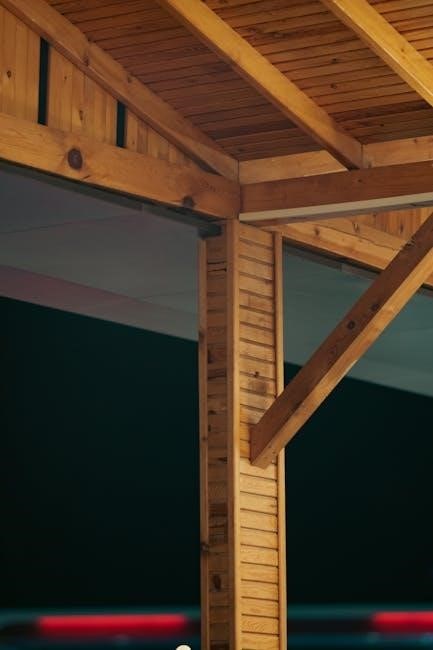
Central to timber frame construction is the intricacy of its joinery. Free plans must provide comprehensive details of each joint – mortise and tenon‚ dovetail‚ scarf‚ and others – illustrating precise dimensions‚ angles‚ and pegging configurations. Clear drawings‚ ideally with sectional views‚ are crucial for accurate replication.

Authentic plans will specify timber sizes appropriate for the joint type and anticipated loads. Pay close attention to peg hole locations and diameters‚ as these significantly impact joint strength. Detailed instructions regarding the order of assembly are also vital‚ preventing errors during construction.
Variations in joinery techniques exist; plans should clearly identify the specific method employed and its suitability for the project’s scale and design. Remember‚ proper joinery is not merely aesthetic; it’s the structural heart of a timber frame‚ demanding precision and adherence to established best practices.
Wall Framing and Bracing
Free timber frame plans should meticulously detail wall framing‚ extending beyond just the primary timber posts and beams. Essential components include the specification of infill materials – whether traditional wattle and daub‚ straw bale‚ or modern SIPs – and their integration with the timber frame. Plans must illustrate how these infills contribute to the wall’s structural integrity and thermal performance.
Bracing is paramount for resisting lateral forces like wind and seismic activity. Detailed diagrams should showcase the placement and type of bracing – diagonal braces‚ shear walls‚ or a combination – ensuring adequate stability. Pay attention to connection details between braces and the main frame.
Consideration should be given to window and door openings‚ with plans indicating header sizes and load distribution. Accurate dimensions and clear labeling are crucial for a structurally sound and weather-tight wall assembly. Proper wall framing and bracing are fundamental to a durable timber frame building.
Roof Framing and Design
Free timber frame plans must provide comprehensive roof framing details‚ showcasing the intricate network of rafters‚ purlins‚ and ridge beams. Plans should clearly indicate timber sizes‚ spans‚ and connection methods‚ ensuring structural integrity under various load conditions – snow‚ wind‚ and live loads. Different roof styles‚ from gable to hip and mansard‚ require specific framing approaches.
Consideration should be given to roof pitch‚ influencing both aesthetics and snow shedding capabilities. Detailed drawings should illustrate the arrangement of common rafters‚ hip rafters‚ and valley rafters‚ along with appropriate bracing to prevent racking. Proper ventilation is crucial to prevent moisture buildup and rot; plans should specify rafter spacing and vent placement.
Inclusion of details regarding roof sheathing‚ underlayment‚ and roofing materials is essential for a complete design. Accurate plans facilitate a weather-tight and durable roof structure‚ protecting the building from the elements.

Legal and Regulatory Considerations
Navigating timber trade regulations‚ like Switzerland’s ban on illegal timber since 2022‚ and the EUDR‚ is vital for compliant building projects utilizing free plans.
Timber Trade Regulations (Switzerland Example ─ Jan 1‚ 2022)
Since January 1‚ 2022‚ Switzerland has implemented stringent regulations prohibiting the placement of illegally harvested timber and related products on the market. This landmark legislation‚ formalized through the Timber Trade Ordinance (TTO)‚ aims to combat deforestation and promote sustainable forestry practices globally.

For those utilizing free timber frame plans‚ understanding these regulations is paramount. While the plans themselves may be freely accessible‚ the timber used in construction must adhere to Swiss law. This means verifying the origin and legality of all timber sources.
The cantons are responsible for overseeing forest owners within Switzerland‚ ensuring compliance with existing forest-related legislation. However‚ for imported timber‚ due diligence is crucial. The regulations mirror a global effort to combat timber trafficking‚ drawing parallels to efforts against illegal wildlife trade. Compliance isn’t merely legal; it’s an ethical imperative for responsible building.
EUDR vs. Swiss Timber Regulations
The European Union Deforestation Regulation (EUDR)‚ replacing the EUTR‚ represents a significant shift in timber sourcing accountability. However‚ crucially‚ the EUDR does not apply within Switzerland. This means Swiss timber regulations operate independently‚ maintaining a distinct framework for legality and sustainability.
For individuals utilizing free timber frame plans and sourcing materials‚ this distinction is vital. While the EUDR focuses on a broader scope of deforestation-risk commodities‚ Switzerland’s TTO specifically targets illegally harvested timber entering its market.
Therefore‚ builders relying on these plans must adhere to Swiss regulations‚ regardless of timber origin. Understanding this difference is essential for ensuring compliance. The Swiss system emphasizes verification of timber sources‚ particularly when harvested from Swiss forests‚ with cantonal oversight. Navigating these regulations is a key aspect of responsible timber frame construction.
Sustainable Timber Sourcing
When utilizing free timber frame plans‚ prioritizing sustainable timber sourcing is paramount. Biobased buildings‚ constructed with responsibly harvested wood‚ are instrumental in combating climate change due to their carbon storage capabilities.
Choosing timber from sustainably managed forests actively supports responsible forestry practices and minimizes environmental impact. This aligns with the growing demand for eco-friendly construction methods and reduces reliance on carbon-intensive materials like concrete and steel.
Consider the origin of the timber and look for certifications that guarantee responsible forestry. Sourcing locally‚ where feasible‚ can further reduce the carbon footprint associated with transportation. Sustainable timber isn’t just an ethical choice; it enhances the longevity and performance of your timber frame structure‚ ensuring a durable and environmentally conscious build.
Safety and Best Practices
Prioritize worker safety! Utilize the UKTFA Health & Safety Code of Practice alongside free plans‚ ensuring performance-based building design and a secure construction process.
UKTFA Health & Safety Code of Practice
The UK Timber Frame Association (UKTFA)‚ in collaboration with the Health & Safety Executive (HSE)‚ has developed a comprehensive Health & Safety Code of Practice specifically tailored for timber frame construction. This crucial document provides detailed guidance to protect workers‚ clients‚ and UKTFA members throughout all phases of a project.
When utilizing free timber frame plans – particularly those sourced online – adherence to this code is paramount. It addresses potential hazards unique to timber frame building‚ encompassing site setup‚ material handling‚ structural assembly‚ and fall protection. The code emphasizes risk assessment‚ safe systems of work‚ and appropriate training for all personnel involved.
Furthermore‚ the UKTFA code promotes a proactive safety culture‚ encouraging continuous improvement and the implementation of best practices. It’s a vital resource for ensuring that even self-build projects based on free plans meet rigorous safety standards‚ minimizing the risk of accidents and promoting a secure working environment. Regular review and updates are integral to maintaining its effectiveness.
Performance-Based Building Design
Performance-based building design represents a shift from prescriptive codes to a focus on achieving specific outcomes‚ like energy efficiency and structural integrity. This approach is particularly relevant when utilizing free timber frame plans‚ as these plans may require adaptation to meet local regulations and performance criteria.
Instead of simply adhering to standardized requirements‚ designers and builders using free plans must demonstrate how the design meets defined performance objectives. This involves detailed analysis‚ modeling‚ and potentially‚ testing to prove the building’s capabilities. It allows for innovative solutions and optimized designs tailored to specific climates and site conditions.
For timber frame structures‚ performance-based design considers factors like thermal performance‚ moisture management‚ and structural resilience. It’s crucial to understand how the timber frame elements contribute to the overall building performance‚ ensuring a durable‚ comfortable‚ and sustainable outcome‚ even when starting with freely available plans.
Advanced Timber Framing Techniques
Explore innovative methods like mass timber construction‚ boosting carbon sequestration and reducing reliance on concrete and steel‚ even when adapting free timber frame plans.
These techniques enhance sustainability and structural performance.
Mass Timber Construction & Carbon Sequestration
Mass timber products‚ such as Cross-Laminated Timber (CLT) and Glulam‚ represent a significant advancement in timber framing‚ offering substantial benefits beyond traditional methods. Utilizing free timber frame plans as a starting point‚ builders can integrate these materials for enhanced structural capabilities and environmental responsibility.
Crucially‚ mass timber actively sequesters carbon dioxide from the atmosphere‚ storing it within the wood for the building’s lifespan – a vital contribution to mitigating climate change. This contrasts sharply with carbon-intensive materials like concrete and steel‚ reducing the overall carbon footprint of construction projects.
Furthermore‚ the growing market for mass timber is fueled by the need for rapid construction and adherence to increasingly stringent sustainability standards. Adapting free plans to incorporate mass timber requires careful consideration of engineering principles and appropriate joinery techniques‚ but the long-term benefits are considerable‚ promoting a circular economy and reducing environmental impact.
Timber Frame Construction in Different Climates (Hot-Dry & Mixed-Dry)
Adapting free timber frame plans for diverse climates‚ particularly hot-dry and mixed-dry regions‚ demands careful consideration of design principles. These environments present unique challenges related to temperature fluctuations‚ humidity control‚ and potential for wildfires.
In hot-dry climates‚ thermal mass is crucial. Timber frame structures can be effectively combined with materials like adobe or rammed earth to regulate indoor temperatures‚ minimizing reliance on mechanical cooling. Mixed-dry climates require a more nuanced approach‚ balancing thermal mass with ventilation strategies to manage seasonal changes.
Utilizing appropriate wood species resistant to decay and insect infestation is paramount. Detailed guides‚ often complementing free plans‚ offer insights into optimal timber selection and construction techniques tailored to specific regional conditions‚ ensuring longevity and structural integrity. Performance-based building design is key to success.